
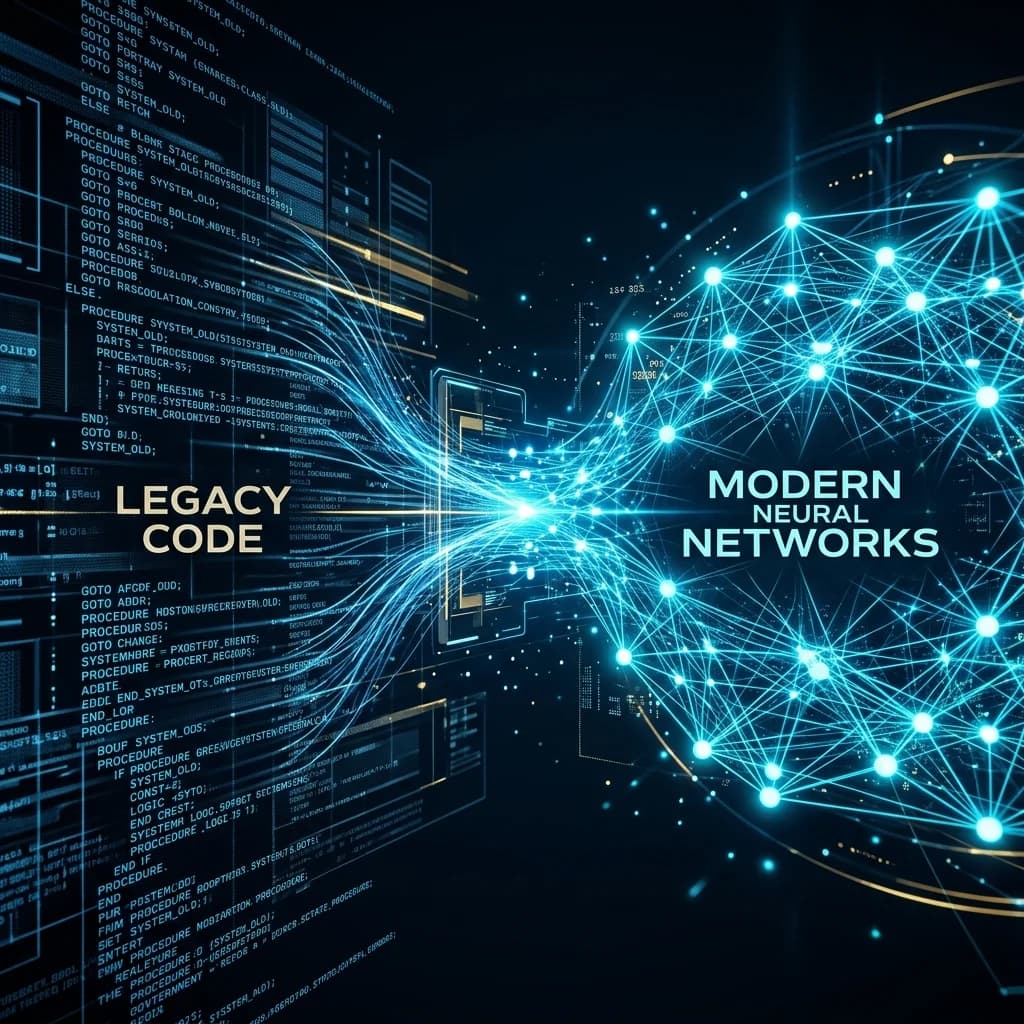
AI-Powered Application & Legacy Modernisation UK
Evolve the Software Your Organisation Already Depends On. Mobiloitte UK helps organisations modernise existing applications, legacy platforms and enterprise systems without automatically committing to a disruptive full rewrite.
We assess the software, data, integrations and business logic already in place and determine what should be retained, optimised, replatformed, refactored, rearchitected, rebuilt, replaced or retired.
Modernisation can then introduce cloud-ready architecture, APIs, improved digital experiences, stronger data foundations and new AI capabilities such as enterprise RAG, copilots, agents, semantic search and workflow automation.
What is AI-powered application modernisation?
AI-powered application modernisation is the process of evolving existing software so it can support current business requirements and carefully selected AI capabilities without unnecessarily rebuilding the entire application.
It can include architecture assessment, AI-assisted code understanding, refactoring, cloud migration, API enablement, data modernisation, UX improvement, DevSecOps, enterprise integration, RAG, agents and intelligent automation.
Modernise or Rewrite?
Start With the Business Case—not the Technology. We apply targeted disposition options based on business value:
Retain
KeepWhen the application continues to meet business needs effectively.
Optimise
ImproveWhen reliability, performance or operations are the main constraints.
Rehost
MoveWhen infrastructure needs to change with minimal software change.
Replatform
UpgradeWhen platform upgrades can provide value without rebuilding the full application.
Refactor
RestructureWhen maintainability and code quality are the issue.
Rearchitect
RedesignWhen the current design blocks future capabilities.
Rebuild
RecreateWhen the existing technology no longer provides an economically viable foundation.
Replace
Adopt CommercialWhen an established off-the-shelf product meets the need more effectively.
Retire
DecommissionWhen the system no longer provides meaningful business value.
Strategic Principle: Align technical decisions with current business needs rather than treating modernisation as a purely technical exercise.
What We Modernise
AI-Assisted Legacy Engineering
Use AI to Improve Understanding Before Changing the System:
AI-Assisted Engineering Capabilities
- Code explanation & Dependency discovery
- Architecture documentation & Test preparation
- API discovery & Migration planning
- Refactoring assistance & Business-rule reconstruction
"AI assists engineering. Architecture, validation, security, testing and production accountability remain with qualified Mobiloitte engineers."
Make Existing Applications AI-Ready
Enterprise RAG
Connect applications with approved organisational knowledge.
AI Copilots
Introduce contextual assistance within current user workflows.
AI Agents
Allow controlled agents to interact with approved APIs and systems.
Semantic Search
Improve information discovery beyond keyword matching.
Document Intelligence
Extract, classify, summarise and route business documents.
Predictive Intelligence
Introduce forecasting, recommendation or anomaly detection where suitable.
Workflow Automation
Reduce repetitive work across connected business systems.
Application, Architecture & Data Modernisation
Application & UX
Improve responsive design, WCAG accessibility, unified design systems, user journeys, application performance, and AI-assisted interfaces.
Architecture Patterns
API enablement → modular monolith → selective service decomposition → event-driven architecture → cloud-native services → containers → workflow orchestration.
Cloud & Data Foundations
Cloud migration, containers, CI/CD pipelines, database modernisation, API security, data quality, metadata governance, and vector search readiness.
Progressive Modernisation Process
A 10-stage delivery framework designed to minimise operational risk:
Discover
Understand workflows and value.
Assess
Review code, data, risks.
Decide
Apply disposition options.
Design
Target architecture path.
Slice
Modernise a valuable boundary.
Integrate
Stabilise API patterns.
AI
Add AI where validated.
Validate
Test security & readiness.
Transition
Controlled cutover strategy.
Evolve
Measure application health.
Our Delivery Principles for Modernisation
Minimise Disruption
Minimise business disruption through phased transition planning and controlled cutovers.
Prioritised Technical Debt
Prioritised reduction of technical debt based on business and engineering value.
Validated AI Acceleration
AI-assisted engineering can help accelerate selected discovery and transformation activities, subject to validation.
Frequently Asked Questions
What is AI-powered application modernisation?
What is AI-powered application modernisation?
AI-powered application modernisation evolves existing software through updated architecture, cloud, data, APIs, UX and AI capabilities such as RAG, agents, semantic search and automation.
Do we need to completely rebuild our legacy application?
Do we need to completely rebuild our legacy application?
No. An assessment should determine whether each component should be retained, optimised, rehosted, replatformed, refactored, rearchitected, rebuilt, replaced or retired.
Can Mobiloitte UK add AI to an existing application?
Can Mobiloitte UK add AI to an existing application?
Yes. Suitable systems can be enhanced with RAG, AI copilots, agents, semantic search, document intelligence, predictive features and workflow automation.
What is the difference between legacy modernisation and AI application modernisation?
What is the difference between legacy modernisation and AI application modernisation?
Traditional modernisation focuses mainly on architecture, technology and infrastructure. AI application modernisation additionally prepares data, workflows, integrations and governance for intelligent capabilities.
Can AI help analyse legacy source code?
Can AI help analyse legacy source code?
AI-assisted tools can support code understanding, dependency analysis, documentation and selected migration activities. Engineering teams remain responsible for architecture, testing and production decisions.
Do you always recommend microservices?
Do you always recommend microservices?
No. Microservices can be useful but also introduce operational complexity. The architecture should follow business boundaries, scale, change patterns and team capability.
Can existing Salesforce, SAP and Dynamics integrations be retained?
Can existing Salesforce, SAP and Dynamics integrations be retained?
Existing integrations can be assessed and retained, improved, API-enabled or replaced depending on stability, security and future requirements.
Can we modernise without moving everything to public cloud?
Can we modernise without moving everything to public cloud?
Yes. Depending on requirements, systems may remain on-premise, move selectively to cloud or use private or hybrid infrastructure.
How do you minimise disruption?
How do you minimise disruption?
Approaches can include phased releases, compatibility layers, APIs, feature flags, parallel operation, canary release and controlled cutover.
How long does modernisation take?
How long does modernisation take?
Timeline depends on application size, architecture, technical debt, data, integrations, security, AI scope and migration requirements.
How much does application modernisation cost?
How much does application modernisation cost?
Cost depends on the existing estate, target architecture, migration scope, integrations, cloud, UX, data and AI requirements. Assessment is generally needed before a reliable estimate can be created.
Does Mobiloitte UK provide ongoing support?
Does Mobiloitte UK provide ongoing support?
Yes. Support can include application maintenance, cloud operations, DevOps, observability, security updates, AI monitoring and continued application evolution.
Evolve Your Software with Confidence
Share your current application, technology constraints, business priorities and AI goals. Mobiloitte UK will help define a realistic phased modernisation roadmap.
Explore Mobiloitte UK Solutions & Capabilities
Quick links to our AI software engineering offerings, UK industry specialization, and London engineering hub.